



 October 26, 2026
 Reading Time: 7m
Residential anxiety treatment provides daily therapy and 24-hour support for teens whose anxiety has disrupted their normal routines. Paradigm Treatment offers anxiety treatment in Texas for teens 13 to 17 at its Austin program, including four individual therapy sessions a week. Each 35- to 60-day stay also includes daily group therapy, weekly family therapy, psychiatric assessment, and integrated academics.
Key Takeaways
- Residential anxiety treatment is appropriate when anxiety prevents a teen from functioning day to day, not simply because a teen is anxious.
- Most children and teens with anxiety disorders improve with outpatient care: in an NIH-funded trial, about 81 percent responded to combined CBT and medication.
- Paradigm’s Austin program provides four individual therapy sessions a week, so skills practiced in one session are revisited within days instead of a week later.
- About 40 percent of adolescents with one type of mental health disorder also meet criteria for another, so evaluation covers depression, trauma, and substance use too.
If your teen’s anxiety has moved beyond what outpatient care can manage, our admissions team is here to talk through what comes next. We are available 24 hours a day, 7 days a week, 365 days a year. Call (855) 506-1151 or verify your benefits online.
When Does Teen Anxiety Require Residential Treatment?
Residential treatment becomes the right level of care when anxiety has stopped a teen from functioning and outpatient treatment hasn’t changed that. Anxiety disorders are the most common mental health condition among U.S. adolescents, affecting nearly a third at some point, and teen anxiety treatment usually starts with outpatient therapy.
For most teens, that is enough. The American Academy of Child and Adolescent Psychiatry recommends CBT and SSRI medication as first-line treatments. In the NIH-funded CAMS trial, about 81 percent of children and teens improved when the two were combined.
Residential care is for the smaller group whose anxiety keeps escalating despite outpatient treatment. Signs your teen may need a higher level of care include:
- Weeks of missed school, or attendance that has become sporadic
- Panic attacks that continue despite outpatient treatment
- Withdrawal from nearly all friends, activities, and family time
- Headaches, stomachaches, or nausea with no medical cause that keep your teen home
- Self-harm or substance use as a way of coping with anxiety
- Outpatient therapy or medication that has stalled for months
If your teen is anxious but still getting to school, sleeping, and spending time with friends, outpatient care is the better fit.
What Residential Anxiety Treatment Involves
Residential treatment for anxiety at our Austin program includes four individual therapy sessions a week and several group sessions every day. Weekly family therapy, multi-family groups, and parent coaching give parents the tools to support progress at home, and psychiatric care continues throughout the stay.
Treatment draws on cognitive behavioral therapy (CBT), including exposure-based work. Dialectical behavior therapy (DBT) and mindfulness-based CBT build skills for managing distress, and art, music, drama, and recreational therapy are part of each teen’s schedule.
Why Therapy Frequency Matters for Anxiety
In outpatient care, CBT for anxiety is usually weekly: in the CAMS trial, participants received 14 sessions over 12 weeks. On our schedule, a skill practiced on Monday is used again by Tuesday or Wednesday, with group sessions in between. For a teen whose anxiety is sustained by avoidance, shorter gaps between practice sessions leave less time for that avoidance to return.
To find out whether this level of care fits your teen, call (855) 506-1151 or begin the admissions process.
Anxiety, School Refusal, and Getting Back to Class
School avoidance is one of the issues our Austin program addresses directly, and the classroom is part of treatment. Teens attend at least three hours of school five days a week, with coursework based on their current school’s requirements and at least two staff in every class. Therapists sometimes observe class, which lets the treatment team see how a teen handles the situations that have been hardest to face.
We also work with each teen’s school as needed to coordinate coursework modifications and workload, so teens can stay on track academically during their stay. Our education team, led by a Director of Education and Transitional Planning, helps teens and families prepare for the return to school.
Anxiety Alongside Depression, Trauma, and Substance Use
In a national survey of U.S. adolescents, about 40 percent of those with one type of mental health disorder also met criteria for another. Our psychiatric evaluation, which can take several hours to several days, identifies other conditions at intake. Co-occurring depression, trauma, and substance use are then treated alongside anxiety by the same team, under one plan.
What Teen Anxiety Treatment in Texas Costs
The cost of treatment depends on length of stay, the level of care your teen needs, and your insurance benefits, so every quote is personalized.
We are in network with most major insurance carriers and work with plans from Aetna, Optum, Cigna, ComPsych, UnitedHealthcare, Blue Cross Blue Shield, and Magellan. For plans outside our network, we work extensively with out-of-network benefits. We do not accept Medicaid or Medicare at this time.
Insurance verification is free, and our team can walk you through payment and financing options for any costs your plan does not cover.
Our Austin, Texas Location
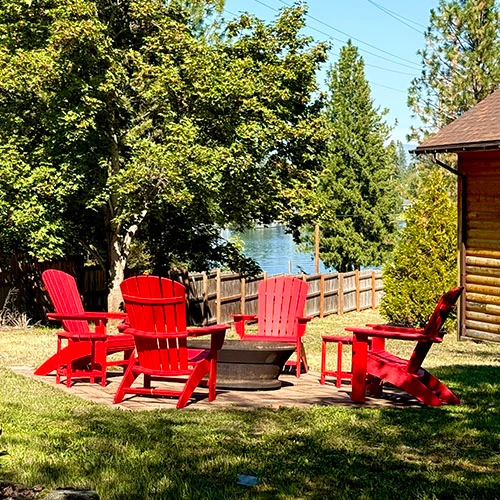
Our Austin program operates out of welcoming residential homes in southwest Austin, surrounded by natural scenery where teens can disconnect from daily distractions. For an anxious teen, the setting supports treatment: a quiet environment and a predictable daily schedule reduce the uncertainty that can make ordinary days feel unmanageable.
Because family therapy happens every week, distance is worth weighing when choosing a teen anxiety treatment center. Families considering anxiety treatment in Austin, TX, can use the approximate drive times below to plan family sessions.
| From | Distance | Approximate drive time |
| Downtown Austin | About 15 miles | 25 minutes |
| Buda | About 10 miles | 20 minutes |
| Kyle | About 15 miles | 25 minutes |
| Round Rock | About 30 miles | 45 minutes |
| Georgetown | About 40 miles | 55 minutes |
| San Antonio | About 75 miles | 1 hour 15 minutes |
| Houston | About 170 miles | 2 hours 45 minutes |
| Fort Worth | About 195 miles | 3 hours |
| Dallas | About 200 miles | 3 hours 15 minutes |
School counselors, pediatricians, and therapists can refer a student or client for anxiety treatment in Texas through the same admissions line.
Frequently Asked Questions
What is the difference between inpatient and residential anxiety treatment?
Inpatient anxiety treatment usually refers to a short hospital stay to keep a teen safe during an immediate crisis. Residential treatment lasts longer and takes place in a home-like setting, where the focus is daily therapy, skills practice, and steady progress back toward school and family life. Residential care can also be a next step after a hospital stay.
Will my teen need medication for anxiety?
That depends on your teen’s psychiatric assessment, which looks at symptoms, history, and any co-occurring conditions. If medication is recommended, it works alongside therapy as part of the overall plan. Our psychiatric team discusses any recommendation with you before treatment changes, so families stay involved in the decision.
Will my teen’s anxiety come back after they come home?
Anxiety can resurface during stressful periods, such as a school transition or a major loss, and that is expected. Treatment focuses on giving teens the skills to recognize early signs and respond to them, and every teen leaves with an individualized aftercare plan. Discharge planning begins well before the program ends.
If outpatient care hasn’t been enough for your teen, we can help you decide whether residential adolescent anxiety treatment is the right next step. Call (855) 506-1151 or contact us online.
Paradigm Treatment Austin
11949 Escarpment Blvd
Austin, TX 78739
Sources
- National Institute of Mental Health. “Any Anxiety Disorder.” Mental Health Statistics. https://www.nimh.nih.gov/health/statistics/any-anxiety-disorder
- Merikangas, K.R., et al. “Lifetime Prevalence of Mental Disorders in U.S. Adolescents: Results from the National Comorbidity Survey Replication-Adolescent Supplement (NCS-A).” Journal of the American Academy of Child and Adolescent Psychiatry, 2010. https://pubmed.ncbi.nlm.nih.gov/20855043/
- Walkup, J.T., et al. “Cognitive Behavioral Therapy, Sertraline, or a Combination in Childhood Anxiety.” New England Journal of Medicine, 2008. https://pubmed.ncbi.nlm.nih.gov/18974308/
- Walter, H.J., et al. “Clinical Practice Guideline for the Assessment and Treatment of Children and Adolescents With Anxiety Disorders.” Journal of the American Academy of Child and Adolescent Psychiatry, 2020. https://www.aacap.org/AACAP/Resources_for_Primary_Care/Practice_Parameters_and_Resource_Centers/Practice_Parameters.aspx