



 October 12, 2026
 Reading Time: 8m
Residential bipolar treatment provides daily therapy, psychiatric care, and 24-hour support while mood symptoms stabilize. At Paradigm Treatment, we offer bipolar treatment in Idaho at residential homes in Coeur d’Alene, with separate programs for teens 12 to 17 and adults 18 and older. Each 35- to 60-day program includes a psychiatric assessment, four individual therapy sessions a week, multiple daily group sessions, and family therapy.
Key Takeaways
- Residential treatment for bipolar disorder is generally appropriate when mood episodes keep returning despite an outpatient medication plan, or when safety can’t be maintained at home.
- Paradigm Treatment’s only adult residential program is in Coeur d’Alene, Idaho, where a separate program also serves teens 12 to 17.
- Medication is central to treating bipolar disorder, and daily contact in residential care lets the treatment team see changes in mood, sleep, and side effects as they develop.
- Between one-third and one-half of people with bipolar disorder also experience a substance use disorder, so evaluation covers co-occurring conditions as well as mood symptoms.
If an outpatient plan has been hard to sustain for you or your loved one, our admissions team is here to talk through what comes next. We are available 24 hours a day, 7 days a week, 365 days a year. Contact us or verify your benefits online.
When Does Bipolar Disorder Need Residential Treatment?
Residential treatment may be the right next step when an outpatient plan is no longer keeping mood episodes under control. Bipolar disorder affects about 4.4 percent of U.S. adults at some point in their lives. Bipolar disorder treatment usually begins with outpatient care from a prescriber and a therapist, supported by a medication plan.
You or your loved one may benefit from a higher level of care if:
- Mood episodes keep returning despite consistent medication use
- A medication regimen needs adjustment and closer observation than outpatient visits allow
- A hospital stay resolved a crisis, but episodes returned after discharge
- Alcohol or drug use is increasing alongside mood episodes
- Safety concerns arise during manic or depressive episodes
- Work, school, or daily routines have become difficult to sustain
When a current plan is keeping mood stable and daily life feels manageable, outpatient care is usually the better fit. We are glad to help you think through that decision as well.
In a crisis, call or text 988 to reach the Suicide and Crisis Lifeline, or call 911 in an emergency.
What Adult and Teen Bipolar Treatment Involves
Our teen residential program in Idaho and adult residential program operate separately, and each includes daily therapy. Clients meet one-on-one with a therapist four times a week, giving them consistent time to work through their personal history and current symptoms in depth. Several group sessions each day give clients a place to develop coping skills alongside peers who understand what they are going through.
We draw on cognitive behavioral therapy (CBT), dialectical behavior therapy (DBT), and mindfulness-based CBT to help clients recognize early signs of a mood episode and manage intense emotions. Each client’s schedule also includes art, music, drama, and recreational therapy. When appropriate, a nutritional evaluation at intake helps us understand how eating patterns and mood affect each other.
To talk through which program is the right fit, contact us to discuss the admissions process.
How Medication Management Works
Care begins with a psychiatric evaluation that can take anywhere from several hours to several days. Together with a medical evaluation, it helps us understand the diagnosis, any co-occurring conditions, and health factors that affect which medications are appropriate.
Outpatient prescribers typically judge how a medication is working from a scheduled appointment and a client’s own account of the time in between. Because our clients are in individual or group sessions every day, changes in sleep, energy, mood, and side effects reach our treatment team quickly.
Studies suggest that about 40 percent of people with bipolar disorder do not take their medication as prescribed, and co-occurring substance use makes this more likely. Our daily schedule gives clients a steady routine that supports taking medication consistently.
Treating Bipolar Disorder and Co-Occurring Conditions Together
National survey data and SAMHSA estimate that between one-third and one-half of people with bipolar disorder also experience a substance use disorder. As a bipolar treatment center focused on mental health, we treat substance use, anxiety, and trauma alongside bipolar disorder, with one treatment team and one coordinated plan.
In therapy, clients look at how these conditions affect one another, such as drinking that increases during depressive episodes or substance use that can intensify manic symptoms. As a mental health program, we support clients with co-occurring substance use by treating the underlying mental health conditions behind it.
What Bipolar Treatment Costs in Idaho
The cost of bipolar treatment in Idaho at Paradigm depends on each client’s length of stay, level of care, and insurance benefits. Because those factors vary, every quote is personalized.
We are in network with major insurance providers and work with plans from Aetna, Optum, Cigna, ComPsych, UnitedHealthcare, BlueCross BlueShield, and Magellan. For plans outside our network, we work extensively with out-of-network benefits. We do not accept Medicaid or Medicare at this time.
Insurance verification is free, and our team can explain payment and financing options for any costs your plan does not cover.
Our Coeur d’Alene Location and Drive Times
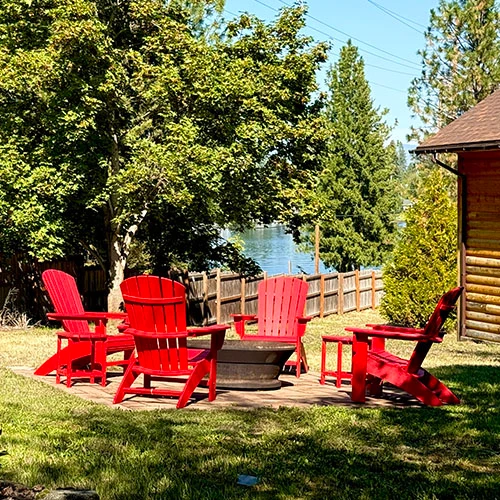
Our Idaho programs take place in welcoming residential homes in the Coeur d’Alene area, surrounded by beautiful scenery where clients can disconnect from daily distractions. We are accredited by The Joint Commission.
For families comparing bipolar disorder treatment centers, distance is an important consideration when loved ones plan to attend family sessions in person. The table below shows approximate distances and drive times to Coeur d’Alene from nearby cities.
| From | Distance | Approximate drive time |
| Hayden, ID | About 7 miles | 15 minutes |
| Post Falls, ID | About 10 miles | 15 minutes |
| Spokane, WA | About 35 miles | 35 to 45 minutes |
| Sandpoint, ID | About 46 miles | 50 minutes |
| Missoula, MT | About 165 miles | 2.5 hours |
Families traveling from Boise and southern Idaho can fly into Spokane International Airport, about 45 minutes west of Coeur d’Alene. Outpatient therapists, psychiatrists, and case managers across the Inland Northwest can also refer clients through the same admissions line.
Frequently Asked Questions
How long does residential bipolar treatment last?
Our Coeur d’Alene programs run 35 to 60 days. The exact length depends on each client’s needs and progress, including how quickly mood symptoms stabilize. Before discharge, our treatment team provides an individualized aftercare plan to support the transition home.
What is the difference between inpatient and residential bipolar treatment?
Inpatient bipolar treatment usually refers to a short hospital stay focused on getting safely through an immediate crisis. Residential treatment lasts longer and takes place in a home-like setting, where clients focus on stabilizing mood, adjusting medication with close observation, and building skills through intensive therapy. Residential care can be the next step after a hospital stay.
Will my medication change during treatment?
Medication changes happen only when the psychiatric assessment and your response during treatment support them. Some clients continue their current regimen while our team monitors how it is working, and others need adjustments. Your psychiatric provider discusses any changes with you, and your medication plan becomes part of discharge planning.
Do you treat teens with bipolar disorder?
Yes. We provide teen bipolar treatment in Coeur d’Alene through a program for ages 12 to 17 that operates separately from our adult program. Integrated academics allow teens to keep up with schoolwork during their stay, and weekly family therapy and parent coaching help families support stability at home.
Can family members or partners take part in adult treatment?
Yes. Our adult program includes weekly family therapy and partner involvement when appropriate, focused on communication and the dynamics at home that affect recovery. When the people closest to you understand bipolar disorder, they can help recognize early signs of an episode and support your plan after discharge.
If outpatient care hasn’t brought lasting stability, we can help you decide whether residential treatment is the right next step. Contact us to get started.
Paradigm Treatment Idaho
6500 N. Mineral Dr., Ste. 206,
Coeur d’Alene, ID 83815
Sources
- National Institute of Mental Health. “Bipolar Disorder.” Mental Health Statistics. https://www.nimh.nih.gov/health/statistics/bipolar-disorder
- Substance Abuse and Mental Health Services Administration. “An Introduction to Bipolar Disorder and Co-Occurring Substance Use Disorders.” Advisory, 2016. https://store.samhsa.gov/sites/default/files/sma16-4960.pdf
- Hunt, G.E., et al. “Comorbidity of Bipolar and Substance Use Disorders in National Surveys of General Populations, 1990-2015: Systematic Review and Meta-Analysis.” Journal of Affective Disorders, 2016. https://pubmed.ncbi.nlm.nih.gov/27426694/
- Cerullo, M.A., and Strakowski, S.M. “The Prevalence and Significance of Substance Use Disorders in Bipolar Type I and II Disorder.” Substance Abuse Treatment, Prevention, and Policy, 2007. https://pmc.ncbi.nlm.nih.gov/articles/PMC2094705/
- Chakrabarti, S. “Medication Non-Adherence in Bipolar Disorder: Review of Rates, Demographic and Clinical Predictors.” World Journal of Meta-Analysis, 2017. https://www.wjgnet.com/2308-3840/full/v5/i4/103.htm